The best portable power stations for a gas furnace
A gas furnace burns its own fuel and asks the grid only for the blower and the control board, which is the good news. The bad news is that both are wired into the house, so the battery is half the job and an electrician is the other half.
Buy the EcoFlow DELTA 2 Max for a winter night, the Anker SOLIX F3800 if your blower is an old hungry one or you want the rest of the house on the same battery, and the EcoFlow DELTA Pro 3 if the furnace is the first piece of a wired-in system rather than the only piece. All three clear this blower's worst-case starting surge on their makers' own peak ratings, all three carry the easy end of a 12-hour night, and not one of them carries the hard end. None of them reaches the blower at all until a licensed electrician has fitted a furnace transfer switch or a power inlet, so get that quote before you buy the box.
The Amazon links on this page are affiliate links: if you buy through one we may earn a commission, at no extra cost to you. It does not change which units are picked. How that works.
| Model | Usable | Output | Short of worst case | Weight | Price | |
|---|---|---|---|---|---|---|
| Our pick | EcoFlow DELTA 2 Max | 1,741 Wh | 2,400 W | 9,059 Wh | 51 lb | on Amazon |
| For a hungry blower | Anker SOLIX F3800 | 3,264 Wh | 6,000 W | 7,536 Wh | 132 lb | on Amazon |
| If this is the first piece | EcoFlow DELTA Pro 3 | 3,482 Wh | 4,000 W | 7,318 Wh | 114 lb | on Amazon |
Who this is for
You have a gas furnace, the power goes out in winter, and the house starts cooling the moment the blower stops. The furnace itself asks little: it burns its own fuel and needs the grid only for the blower motor and the control board. What you want is that much running through the night, indoors, without a generator to start in the snow.
If the heat in your house is electric rather than gas, this is not your plan; we sized a blower and its controls, not a heating element. If what you want is the fridge, the router and a few lamps, that is our page on portable power stations for home backup. And if you are not willing to have an electrician at the furnace, read the hooking-it-up section first, because nothing here reaches the blower without one.
How much battery you need
The blower is the plan. Everything here running at once takes 430 to 1,320 watts, and the blower is more than nine-tenths of the energy; the router, the modem and a few LED lamps together barely move the total. Starting the blower is the second number and a different one: 1,230 to 3,620 watts for a split second, and a station whose peak rating falls short of that does not run the furnace weakly, it fails to start it.
The range is that wide because two furnaces are not the same appliance. A variable-speed ECM blower sips and an older PSC motor gulps, and that gap alone is threefold. Then the weather sets the duty cycle: on a mild night the blower runs perhaps a third of the hour, and in a hard freeze better than two-thirds of it. Multiply the two together across 12 hours and you get the difference between 1,635 and 10,800 watt-hours. The furnace nameplate settles the first half of that, so read it before you buy anything.
We size on the harder end. Of the 58 units we track, 25 carry the easy end of the night and not one carries the hard end. So the shape of the advice is this: buy the peak rating that will start your own blower, expect a mild night to be covered and a bitter one not to be, and treat everything past that as a recharge problem rather than a bigger-box problem.
Adjust this plan to your house. Change the hours or the loads and the picks are re-scored here, with the same planner and the same maker figures.
Where the energy goes, load by load
| Load | Hours | Running watts | Duty cycle | Energy | Share of worst case |
|---|---|---|---|---|---|
| Gas-furnace blower | 12 | 400–1,200 | 30–70% | 1,440–10,080 Wh | 93% |
| Wi-Fi router and modem | 12 | 15–40 | 100% | 180–480 Wh | 4% |
| A few LED lights | 4 | 15–80 | 25–75% | 15–240 Wh | 2% |
Energy = running watts × duty cycle × hours, at each end of the range. The right-hand end of every row is what the plan is sized on.
A gas furnace blower, Wi-Fi and a few LED lights for a 12-hour night, run against all 58 units we track: 25 clear at least the best case, 30 do not, and 3 could not be judged (a missing maker figure or an unresolved recall identity). Every figure is from the maker’s own page or manual; nothing here was tested by us. The method.
Our pickEcoFlow DELTA 2 Max
A night, for most furnaces
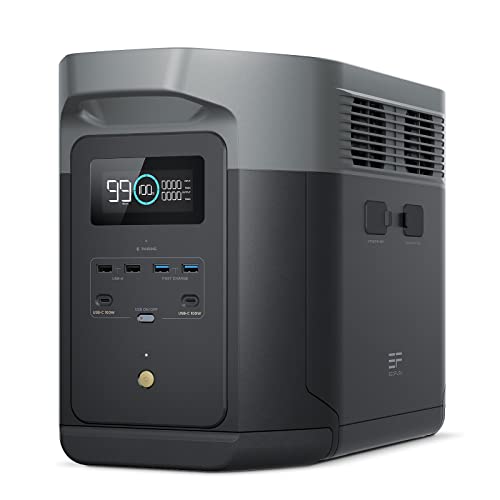
$1,049 at Amazon, September 16, 20262,048 Wh (1,741 usable)2,400 W continuous4,800 W peak51 lb
The EcoFlow DELTA 2 Max clears this blower's worst-case starting surge on EcoFlow's own peak rating, and it is the only one of the three you could carry down to the furnace by yourself. It covers the easy end of a 12-hour night and not the hard end, which is true of everything portable. It suits an efficient variable-speed furnace and an outage measured in hours, and if your blower turns out hungrier than you thought, two expansion batteries take it to three times the capacity rather than sending you back to the shop.
Against the worst case it is 9,059 Wh short: about 9.1 hours of full sun at its 1,000 W solar input, or roughly 45 hours from one 200 W panel, and real panels deliver less than their rating.
The listing we verified as the bare unit; the price is on Amazon.
A gas furnace blower, Wi-Fi and a few LED lights for a 12-hour night:
- Energyonly in the best case
- Running loadyes, even in the worst case
- Starting surgeyes, even in the worst case
A full day (24 hours) of the same loads:
- Energyno
- Running loadyes, even in the worst case
- Starting surgeyes, even in the worst case
Living with it
Cold catches people here, because the furnace lives where the house is coldest. This unit runs well below freezing but will not charge below it, so a station parked in an unheated crawl space will work through the night and then refuse a solar panel in the morning. If that is where it lives, plan on bringing it indoors to refill.
Between the wall and the furnace it passes grid power through and picks the load up when the supply drops. EcoFlow's marketing page quotes that handover at a couple of hundredths of a second while the printed manual still gives the older, slower figure, and the manual is blunt that this is not a true no-break supply. Pass-through also has a clock on it above a certain current. Then set the timers, because the AC side switches itself off after half a day with nothing drawing, and a furnace between calls for heat draws nothing.
Leaving the AC outputs switched on carries a standing cost. EcoFlow publishes no idle figure anywhere we looked, and the independent testers who measured one disagree with each other, though all found it worth caring about; one also found the inverter inefficient at exactly the small loads a router and a lamp make. Wall recharge is quick, though the maker's claimed time and the manual's charging diagram do not describe the same charge. Five-year warranty and a long cycle life. Owners report one-off faults rather than a pattern: USB ports that stopped until a factory reset, a car outlet that never worked from new.
- Switchover when the grid drops
- About 20 ms (manual says within 30 ms)ecoflow.com
- Pass-through charging
- Yes, via AC bypass; not a true UPS for serverswebsiteoss.ecoflow.com
- Wall recharge
- 0-80% in about 1.1 h on AC aloneecoflow.com
- Noise
- About 30 dBecoflow.com
- Charges between
- 0°C to 45°C (32°F to 113°F)websiteoss.ecoflow.com
- Low-load shutoff
- AC outlets shut off after 12 h with no load; adjustable in appwebsiteoss.ecoflow.com
- Expansion
- Up to 2 extra batteries, 6,144 Wh totalwebsiteoss.ecoflow.com
- Warranty
- 5-year warrantyecoflow.com
What owners report, from public threads and long-term reviews; not our own testing.
- One tester measured about 23W drawn just from leaving AC output switched on (versus about 5W with it off) and recommends switching it off when not needed.windinmyface.com
- At least one long-term owner reported USB output ports randomly stopped working, requiring a factory reset each time to restore them.4wdtalk.com
- Independent bench testing found real-world AC efficiency drops to about 77% at everyday 200W loads, well below the unit's rated sweet-spot efficiency.windinmyface.com
- One owner's 12V car outlet never worked from new, suspected to be an isolated manufacturing defect rather than a design-wide flaw.4wdtalk.com
- A one-year overlander who ran the unit daily calls it reliable and consistent, and a two-year owner says it still delivers its full rated 2,400W without dropouts.4wdtalk.com
What independent testers measured
We do not test units ourselves. These are figures published by testers who did, with the maker’s claim beside them where the tester gave it.
| Measurement | Result | Tester |
|---|---|---|
| Noise under load, measured | 52 dB measured fan noise during heavy loads/charging | Power Station Advisor |
| Wall charge, to 80% | 0-80% AC charge in 65 minutes, per the site's own spec/test line comparing it to the DELTA 2 (maker: EcoFlow rates 0% to 80% in 50 minutes (per a separate PowerStationAdvisor article on the same site)) | Power Station Advisor |
| Also measured | Real-world 14-hour power outage: ran fridge continuously, LED lights, charged devices, ran a space heater on low, finished with 23% capacity remaining, no add-on batteries | Power Station Advisor |
| Also measured | Refrigerator (full-size) runtime in personal testing: approximately 16-20 hours on a single charge (maker: EcoFlow-derived calculation elsewhere on the site put it at ~14.2 hours for a fridge cycling 100-400W) | Power Station Advisor |
- After eight months of testing, the DELTA 2 Max is their top pick for whole-home backup, striking the best balance of capability, longevity and value in its class. (Our Top Pick for Whole-Home Backup) Power Station Advisor
- Positioned as the better choice than the standard DELTA 2 for families needing whole-home backup, extended outages, and future battery expansion. Power Station Advisor
What you give up
Energy. It holds the least battery here and it is the first to empty on the coldest night, which is the night you bought it for; stretched to a full day it does not clear the plan at all. One other thing belongs on this card. No published recall names this exact model, but a similarly named EcoFlow product was recalled and the dossier below names it, so match the model number on the box against the listing before you plug anything in.
Figures from us.ecoflow.com, captured August 12, 2026; recall screen: no published recall names this exact model (screened 2026-08-12), but a similarly named product was recalled; the dossier names it (how we screen, CPSC).
For a hungry blowerAnker SOLIX F3800
A day, or a hungry blower
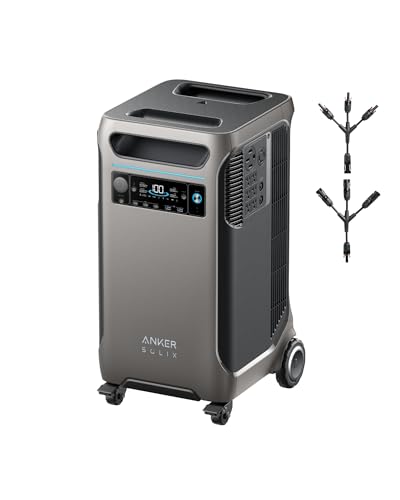
$2,200 at Amazon, September 16, 20263,840 Wh (3,264 usable)6,000 W continuous9,000 W peak132 lb
The Anker SOLIX F3800 holds nearly twice the usable energy of our pick and has output left over for the rest of the house, which is what you want if your furnace turns out to have an old single-speed motor rather than a variable-speed one. It does not change the verdict at the hard end, because nothing portable does, but it moves the plausible middle of the range from marginal to comfortable. It also has the widest cold tolerance of the three, which counts when the thing lives beside the furnace. Buy it knowing it is a fixture rather than a carry.
Against the worst case it is 7,536 Wh short: about 3.1 hours of full sun at its 2,400 W solar input, or roughly 38 hours from one 200 W panel, and real panels deliver less than their rating.
The listing we verified as the bare unit; the price is on Amazon.
A gas furnace blower, Wi-Fi and a few LED lights for a 12-hour night:
- Energyonly in the best case
- Running loadyes, even in the worst case
- Starting surgeyes, even in the worst case
A full day (24 hours) of the same loads:
- Energyno
- Running loadyes, even in the worst case
- Starting surgeyes, even in the worst case
Living with it
It runs colder than either EcoFlow pick on the maker's own figures, and like them it will not charge below freezing. That is the reason to put this one, not the others, in an unheated basement beside the furnace. Decide where it lives before it arrives: it comes on casters with a telescoping handle, and every reviewer who moved one says the wheels roll it across a flat floor and nothing more.
Anker SOLIX publishes no wall-recharge time and no pass-through figure for the US unit on any page we captured. One three-week test measured a wall recharge to most-full in well under two hours, and solar input close to the rated ceiling in good sun falling to about a third of that under cloud, which is what a winter sky gives. The unit powers itself off after about half a day with the outputs off and nothing drawing, and a furnace between cycles looks like nothing; the timer is adjustable in the app.
Noise is the surprise. At light loads it is nearly silent, but testers found the fans cycling unpredictably at small loads and ramping hard once the draw passes roughly forty percent, which a blower does every time it starts. The same testers put real inverter losses at about a seventh, so plan on the usable figure above, not the nominal one. The app held up through real outage duty in two hands-on tests. The built-in light is a dim nightlight and no more, which matters in a dark basement. Five-year warranty, and room for six expansion batteries.
- Charges between
- 0°C to 40°C (32°F to 104°F) while chargingsignaturesolar.com
- Low-load shutoff
- Shuts off after about 12 h idle with no loadsignaturesolar.com
- Expansion
- Up to 6 add-on batteries, 26.88 kWh added capacityankersolix.com
What owners report, from public threads and long-term reviews; not our own testing.
- Multiple reviewers report fan noise climbs sharply under heavy load — about 68 dB at 90% load versus 58 dB at 50% load — despite near-silent operation at lighter loads.backuppowerhub.com
- The roughly 132 lb weight is a recurring complaint; reviewers needed a second person or a vehicle ramp to move it anywhere the built-in wheels couldn't roll it.protoolreviews.com
- One long-term tester measured real-world AC recharge at about 1 hour 38 minutes to 80% (roughly 2h21m full) on a standard outlet, slower than a quick top-up.backuppowerhub.com
- A 2-ton central air conditioner drained the unit in only about 1.6 hours despite its 6,000W rating, so it isn't a practical all-day whole-home AC backup alone.backuppowerhub.com
- One tester measured real-world inverter efficiency at only about 85%, meaning a 3,000W draw actually consumes roughly 3,530Wh from the battery — more than the rated draw implies.backuppowerhub.com
What independent testers measured
We do not test units ourselves. These are figures published by testers who did, with the maker’s claim beside them where the tester gave it.
| Measurement | Result | Tester |
|---|---|---|
| Wall charge, to 80% | 1 hour 38 minutes from 0-80% on a standard 120V/15A outlet (max 1,440W input) | Backup Power Hub |
| Wall charge, empty to full | 2 hours 21 minutes from dead to full via AC | Backup Power Hub |
| Inverter efficiency, measured | ~85% inverter efficiency, measured during testing | Backup Power Hub |
| Solar input achieved | 1,850W peak solar input achieved with three 400W panels in ideal conditions (maker: 2,400W rated solar input (per generatorchecker.com spec listing, not stated by this tester)) | Backup Power Hub |
| Noise under load, measured | 58 dB at 3 feet at 50% load (3000W) | Backup Power Hub |
| Noise under load, measured | 68 dB at 90% load (5400W), 'comparable to a dishwasher' | Backup Power Hub |
- After a three-week real-world test running central AC, refrigerators, and power tools, the reviewer rated the F3800 9.2/10, calling it the best split-phase 240V whole-home option currently on the market. (Editor's Choice (per site homepage listing, 9.2/10)) Backup Power Hub
- The reviewer calls the F3800 a solid investment at $3,499 for whole-home backup power or off-grid adventures, despite it being the heaviest single-unit station they've tested. The Solar Lab
What you give up
Weight and money. It costs about twice what our pick does, weighs more than twice as much, and a furnace is usually down a flight of stairs: reviewers needed a second person or a ramp to get one anywhere the wheels could not roll. The fans are the loudest here once the load is real. And if what you want is capacity rather than output, the EcoFlow DELTA Pro 3 holds more of it and is the one with a maker's home panel behind it.
Figures from ankersolix.com, captured August 12, 2026; recall screen: no published recall names this exact model (screened 2026-08-12) (how we screen, CPSC).
If this is the first pieceEcoFlow DELTA Pro 3
The start of a wired-in system
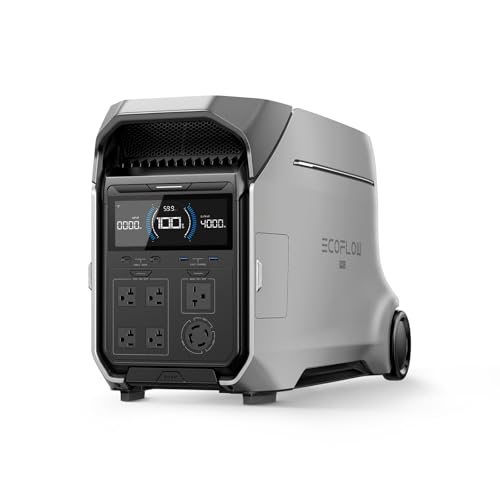
$3,699 at Amazon, September 16, 20264,096 Wh (3,482 usable)4,000 W continuous8,000 W peak114 lb
The EcoFlow DELTA Pro 3 holds the most usable battery of the three and it is the only one that still carries the easy end of a full day rather than only a night. It is also the one EcoFlow sells a home panel for, so a furnace circuit today can become a set of backed-up circuits later without buying the battery twice over. Its native 240-volt outlets are what an electrician wants to see if the inlet is ever going to feed more than one 120-volt load. It suits someone who has already decided the wiring work is happening.
Against the worst case it is 7,318 Wh short: about 2.8 hours of full sun at its 2,600 W solar input, or roughly 37 hours from one 200 W panel, and real panels deliver less than their rating.
The listing we verified as the bare unit; the price is on Amazon.
A gas furnace blower, Wi-Fi and a few LED lights for a 12-hour night:
- Energyonly in the best case
- Running loadyes, even in the worst case
- Starting surgeyes, even in the worst case
A full day (24 hours) of the same loads:
- Energyonly in the best case
- Running loadyes, even in the worst case
- Starting surgeyes, even in the worst case
Living with it
Cold rules are our pick's, not the Anker's: it runs below freezing and will not charge below it. At its weight it is movable rather than portable, on wheels with a telescoping handle reviewers call wobbly, and they want a ramp or a second person for stairs or a car. A basement furnace means that trip happens once, so plan it.
The trap on this unit is bypass. EcoFlow's page advertises pass-through at full continuous output, while its own manual caps US bypass at the wall socket's current, a fraction of that, and lower again for continuous use. One tester had a compressor's startup surge trip a shutdown in bypass, though the same unit handles far more off the battery alone. On a page about starting a blower motor that is the line that matters: plugged in, your surge headroom is the wall's. The idle timeout can be set to never in the app, which is what you want here; the manual does not say what the default is.
Recharge has a similar spread. The headline figure looks like a maximum multi-input combination rather than a wall outlet, the manual's standard AC input is only the socket, and testers measured close to three hours for a full charge. The advertised solar input needs two separate arrays on two ports with different voltage specs; one reviewer suggests planning around less. One long-term tester hit repeated false short-circuit shutdowns over about five weeks, each needing a manual reset, until firmware cleared them. Three-year warranty, five if you register it in the app.
- Switchover when the grid drops
- 10 ms rated; can still trip sensitive electronics per testersecoflow.ie
- Pass-through charging
- Up to 4,000W claimed, but bypass mode capped near 1,800Wus.ecoflow.com
- Wall recharge
- 80% in 50 min claimed; testers measured closer to 3 hoursus.ecoflow.com
- Noise
- As low as 30 dB claimed; whine noticeable at higher loadsecoflow.com
- Charges between
- 0°C to 45°C (32°F to 113°F)ecoflow.ie
- Low-load shutoff
- AC output auto-shuts off after idle; adjustable, can disableecoflow.ie
- Expansion
- Up to 2 extra batteries via one expansion portecoflow.ie
- Warranty
- 3-year warranty, extendable to 5 years by registeringus.ecoflow.com
What owners report, from public threads and long-term reviews; not our own testing.
- One long-term tester experienced repeated false 'electrical short' shutdowns over about 5 weeks, each needing a manual reset, until a firmware update appeared to fix it.cleantechnica.com
- A tester found the UPS switchover used a 'floating ground' that caused a desktop PC to click off during a transfer despite the advertised under-10ms switchover time.robbsutton.com
- The marketed 4,000W pass-through capacity is capped near 1,800W in US bypass mode, and one AC compressor's startup surge tripped a shutdown even though the unit handles 4,000W fine on battery alone.cleantechnica.com
- At about 114 lb with a telescoping handle described as wobbly when extended, reviewers call the unit 'movable' rather than truly portable, recommending a ramp or a second person to load it.robbsutton.com
- Despite the 4,000W rating, a 3-ton central AC unit fitted with a soft-start kit still triggered overload protection in one test, raising doubts about its use for whole-home HVAC backup.robbsutton.com
What independent testers measured
We do not test units ourselves. These are figures published by testers who did, with the maker’s claim beside them where the tester gave it.
| Measurement | Result | Tester |
|---|---|---|
| Inverter efficiency, measured | About 89% efficiency sustaining a near-maximum (~3,650W) load for 60 minutes | The Solar Lab |
| Wall charge, empty to full | About 2 hours 54 minutes (174 min) full AC charge, tester-measured (maker: 2 hours 20 minutes (140 min) advertised) | The Solar Lab |
| Also measured | Surge test: handled 5,100W for nearly a minute before shutting down as load approached 6,000W | The Solar Lab |
| Also measured | Qualitative noise: quiet under a 2,000W load, more noticeable at higher loads (no dB figure given) | The Solar Lab |
| Also measured | Pass-through charging tested and worked correctly | The Solar Lab |
| Weight, measured | 113 lb, noted by the tester as heavier than the original DELTA Pro | The Solar Lab |
- Scored 81/100, ranked #2 of 14 power stations tested, and named Best for Home Backup for its power output and expansion capability despite its weight and price. (Best for Home Backup) OutdoorGearLab
- A solid, worthy power station overall, but an incremental update that existing DELTA Pro owners have little compelling reason to upgrade to. The Solar Lab
What you give up
Price, and what it buys on this page. Through a single winter night its verdict is the same as the cheapest pick's, so most of what you are paying for only pays off on day two or once the panel is installed. It cannot put out 120 and 240 volts at the same time, which an electrician will want to know before wiring the inlet, and in bypass it is the weakest of the three.
Figures from us.ecoflow.com, captured August 12, 2026; recall screen: no published recall names this exact model (screened 2026-08-12) (how we screen, CPSC).
Day two and three
Twice that stretch, a full day (24 hours) of the same loads, needs 3,270 to 21,600 watt-hours. The EcoFlow DELTA Pro 3 is the only one of the three that covers even the bottom of it on a single charge, nothing we track covers the top, and past the first night the question stops being which box and becomes how you put energy back into it.
Winter is the worst season to ask that. The sun is low, the day is short and a snowed-over panel delivers nothing at all, so solar is the weakest refill exactly where this page needs it most. If the grid comes back in patches, a wall outlet settles the argument and all three take a useful top-up in the lull. If it stays down, buy the expansion battery before the second panel, because it works in the dark, or run a generator outside and let it refill the station indoors, which is the arrangement our generator page is about.
Hooking it up safely
A gas furnace has no plug. The blower and the control board come off a circuit in the breaker panel, which is why every pick here needs wiring work before it is any use. There are two ways to do it. The small one is a furnace transfer switch: an electrician fits a plug and a switch at the furnace itself, so the furnace can come off its house circuit, plug into the station, and go back afterwards. The larger one is a power inlet box wired to a transfer switch or an interlock at the panel, which buys you the furnace circuit and whatever else you chose. A transfer switch disconnects the house from the grid before it connects the station; an interlock is a plate on the panel that physically stops the main breaker and the backfed generator breaker being on at the same time. Reliance Controls says its inlet boxes must be fitted by a qualified electrician in compliance with local codes, and marks its generator-ready panel as not for do-it-yourself installation. Electricians on the trade forums frame the choice as cost against judgment: an interlock is cheaper and reaches any circuit within the station's output, while a transfer switch costs more and pre-selects a few circuits, so there is less to get wrong in the dark.
What you must not do is feed the house by plugging the station into a wall socket. Generac says backfed power can seriously injure or kill the line worker restoring your street, and that backfeeding is illegal in many places and against the National Electrical Code. EcoFlow, which makes two of our three picks, says the same thing in its own manual: do not hook a power station to a building's electrical system without a properly installed isolation switch. Code guidance on optional standby systems requires that switch so the utility and the station can never be live together; a permit is due the moment a transfer switch or interlock goes in, and most building departments expect a licensed electrician to sign the electrical subpermit. Get the quote before you buy the box. If it comes back as more wiring than you want, the same inlet takes a generator instead, which is our page on portable generators for home backup, though CPSC says a generator runs outdoors only, at least twenty feet from the house with the exhaust pointed away, and that is a harder rule to keep in a blizzard than it sounds.
Buying it right
A search for any of these models returns bundles, sibling models and, often, the same unit under two listings at different prices. We link only a listing whose own title states the bare unit and its exact battery and output; the box should say the same. Check the seller is the maker or Amazon itself, and that the model number on the label matches the one on this page.
EcoFlow DELTA 2 Max
- The listing we verified: “EF ECOFLOW Portable Power Station DELTA 2 Max 2048Wh, 2400W LiFePO4 Battery”, $1,049 when checked. Title states 2048Wh and 2400W, matching our record exactly.
- “EF ECOFLOW DELTA 2 Max Power Station Extra Battery, 2048Wh LiFePO4 Battery”, $879: the same unit under a second listing at $879; we link the cheaper verified one.
- “EF ECOFLOW DELTA 3 Max Portable Power Station, 2048Wh LFP Battery, 2400W”, $1,199: a different model that a search for this one returns.
- “EF EcoFlow Delta 2 Max Portable Power Station with 800W Alternator Charger”, $1,249: a bundle, not the bare unit; the extra hardware is in the price.
- “EF ECOFLOW DELTA 2 Max Portable Power Station, 2048Wh, 2400W”, $1,399: the same unit under a second listing at $1,399; we link the cheaper verified one.
Anker SOLIX F3800
- The listing we verified: “Anker SOLIX F3800 Portable Power Station, 3,840Wh”, $2,200 when checked. Title states 3840Wh and the exact model name with no variant word; it does not state a wattage, so output was not cross-checked against our 6000W record. (previously verified ASIN, re-checked by direct lookup)
- “Anker SOLIX F3800 Portable Power Station and 400W Solar Panel, 3,840Wh”, $2,400: a bundle, not the bare unit; the extra hardware is in the price.
- “Anker SOLIX F3800 Portable Power Station, 3840Wh, LiFePO4 Batteries, Ultra-High 6000W AC Output with 120V/240V, Solar Generator for Home Backup and Outdoor Camping (Renewed)”, $1,759: Listing is renewed/refurbished, not the new base unit..
EcoFlow DELTA Pro 3
- The listing we verified: “EF ECOFLOW DELTA Pro 3 Portable Power Station, 4096Wh, 4000W AC Output”, $3,699 when checked. Title states 4096Wh and 4000W, matching our record exactly.
- “EF ECOFLOW Power Station 4096Wh DELTA Pro 3 with 400W Portable Solar Panel”, $3,099: a bundle, not the bare unit; the extra hardware is in the price.
- “EF ECOFLOW Portable Power Station 3600Wh DELTA Pro, 120V 3600W AC Output”, $1,899: a different model that a search for this one returns.
- “EF ECOFLOW 12kWh Portable Power Station: DELTA Pro 3 with 2 Extra Batteries”, $6,169: Listing title does not state a capacity, so base-unit identity cannot be confirmed..
What this page can’t promise
This page sizes a battery against a blower it has never met. Whether yours is a variable-speed motor or an old single-speed one moves the answer more than any choice between the picks, and no battery helps a furnace that was never wired to accept one. We cannot promise your furnace will run, only tell you what it would take and what the wiring half involves.
Nothing here was tested by us. The figures are the makers' own, read off their pages and manuals and cited under each pick, and where a marketing page and a printed manual disagree we say so rather than take the better number. What owners report comes from hands-on review sites, labelled as such.
The competition
Every unit we track was run against the same plan. The ones that clear at least the best case are below with their own shortfall; the ones that do not are listed with the rule they fail.
Every unit that clears at least the best case (25)
| Model | Battery | Peak | Weight | Worst-case shortfall | Verified price | Verdict |
|---|---|---|---|---|---|---|
| Zendure SuperBase V6400 | 6,438Wh | 5,000W | not captured | 5,328 Wh | no verified listing | Clears the best case only |
| Jackery Explorer 5000 Plus | 5,040Wh | 14,400W | 134 lb / 61.0 kg | 6,516 Wh | no verified listing | Clears the best case only |
| Zendure SuperBase V4600 | 4,608Wh | 5,000W | 55 lb / 25.0 kg | 6,883 Wh | no verified listing | Clears the best case only |
| EcoFlow DELTA Pro 3 | 4,096Wh | 8,000W | 114 lb / 51.5 kg | 7,318 Wh | $3,699 | Clears the best case only |
| Goal Zero Yeti PRO 4000 | 3,994Wh | 7,200W | 116 lb / 52.5 kg | 7,405 Wh | no verified listing | Clears the best case only |
| Anker SOLIX F3800 | 3,840Wh | 9,000W | 132 lb / 60.0 kg | 7,536 Wh | $2,200 | Clears the best case only |
| Anker SOLIX F3800 Plus | 3,840Wh | 9,000W | 132 lb / 60.0 kg | 7,536 Wh | no verified listing | Clears the best case only |
| Jackery HomePower 3600 Pro Max | 3,600Wh | not captured | not captured | 7,740 Wh | no verified listing | Clears the best case only |
| EcoFlow DELTA Pro | 3,600Wh | 7,200W | 99 lb / 45.0 kg | 7,740 Wh | no verified listing | Clears the best case only |
| Jackery HomePower 3600 Plus | 3,600Wh | not captured | not captured | 7,740 Wh | no verified listing | Clears the best case only |
| Anker SOLIX F3000 (UL9540 Certificated) | 3,072Wh | 7,200W | 91 lb / 41.5 kg | 8,189 Wh | no verified listing | Clears the best case only |
| EcoFlow DELTA 3 Ultra (3072Wh) | 3,072Wh | 7,200W | 72 lb / 32.7 kg | 8,189 Wh | no verified listing | Clears the best case only |
| Jackery HomePower 3000 | 3,072Wh | 7,200W | 60 lb / 27.0 kg | 8,189 Wh | no verified listing | Clears the best case only |
| EcoFlow DELTA 3 Ultra Plus (3072Wh) | 3,072Wh | 7,200W | 74 lb / 33.7 kg | 8,189 Wh | $1,599 | Clears the best case only |
| BLUETTI Apex 300 Home Battery Backup | 2,765Wh | 7,680W | 84 lb / 38.0 kg | 8,450 Wh | no verified listing | Clears the best case only |
| Anker SOLIX F2600 | 2,560Wh | 2,800W | 70 lb / 31.6 kg | 8,624 Wh | no verified listing | Clears the best case only |
| Zendure SuperBase Pro 2000 | 2,096Wh | 4,000W | 47 lb / 21.2 kg | 9,018 Wh | no verified listing | Clears the best case only |
| Anker SOLIX C2000 Gen 2 | 2,048Wh | 4,000W | 41 lb / 18.6 kg | 9,059 Wh | $1,000 | Clears the best case only |
| EcoFlow DELTA 2 Max | 2,048Wh | 4,800W | 51 lb / 23.0 kg | 9,059 Wh | $1,049 | Clears the best case only |
| EcoFlow DELTA 3 Max (2048Wh) | 2,048Wh | 4,800W | 45 lb / 20.3 kg | 9,059 Wh | no verified listing | Clears the best case only |
| Jackery HomePower 2000 Plus v2 | 2,048Wh | not captured | not captured | 9,059 Wh | no verified listing | Clears the best case only |
| BLUETTI AC200L | 2,048Wh | not captured | 62 lb / 28.3 kg | 9,059 Wh | no verified listing | Clears the best case only |
| EcoFlow DELTA 3 Max Plus (2048Wh) | 2,048Wh | 6,000W | not captured | 9,059 Wh | no verified listing | Clears the best case only |
| Jackery Explorer 2000 Plus | 2,043Wh | 6,000W | 62 lb / 27.9 kg | 9,064 Wh | no verified listing | Clears the best case only |
| Jackery Explorer 2000 v2 | 2,042Wh | 4,400W | 39 lb / 17.9 kg | 9,064 Wh | $999 | Clears the best case only |
What will not work, and why (30)
- Too little energy (15). Even the best case needs 1,635 Wh over 12 hours; these hold less than that: PECRON E2000LFP (1,632 Wh usable); Jackery Explorer 1500 Ultra (1,306 Wh usable); Jackery Explorer 1500 v2 (1,306 Wh usable); Jackery Explorer 1000 Plus (JE-1000C) (1,075 Wh usable); Jackery Explorer 1000 v2 (910 Wh usable); Anker SOLIX C1000 (898 Wh usable); Jackery HomePower 1000 v2 (870 Wh usable); EcoFlow DELTA 3 Plus (870 Wh usable); EcoFlow DELTA 3 Classic (1024Wh) (870 Wh usable); EcoFlow DELTA 3 (870 Wh usable); BLUETTI Elite 100 V2 (870 Wh usable); EcoFlow DELTA 2 (EFD330) (870 Wh usable); Anker SOLIX C1000 Gen 2 (870 Wh usable); Jackery Explorer 600 v2 (544 Wh usable); BLUETTI AC50B (381 Wh usable).
- Cannot start the biggest motor (1). A compressor pulls several times its running watts for a split second; at minimum this plan needs 1,230 W of peak output, and these publish less: EcoFlow RIVER 3 Plus (1,200 W peak).
- Out of scope: 10 fuel generators. Not a failure of the numbers: this plan is indoors-only, and a generator burns fuel, so it must stay outside, far from windows, doors and vents. Honda EU2200i Super Quiet Inverter Generator, Honda EU3000iS Inverter Generator, FIRMAN WH03242 Dual-Fuel Inverter, Champion 201444 5500W Inverter, Champion 201255 5500W Open Frame Inverter (CARB), Champion 201254 5500W Dual Fuel Open Frame Inverter (CARB), Champion 201513 6500W Inverter, Champion 201598 8500W Wireless Start Tri Fuel Inverter, Champion 201176 9000W Tri-Fuel Open Frame Inverter, Westinghouse WGen9500DF.
- Jackery Explorer 300D — Continuous output is 140W. Your selected loads draw at least 430W running together, so this unit cannot run them even in the best case.
- Anker SOLIX C300 — Continuous output is 300W. Your selected loads draw at least 430W running together, so this unit cannot run them even in the best case.
- Jackery Explorer 300 v2 — Continuous output is 300W. Your selected loads draw at least 430W running together, so this unit cannot run them even in the best case.
- EcoFlow RIVER 3 — Continuous output is 300W. Your selected loads draw at least 430W running together, so this unit cannot run them even in the best case.
Questions people ask
Can a portable power station run a gas furnace?
Electrically, yes. The blower and the controls draw 430 to 1,320 watts, which plenty of the units we track can hold through a night. Physically, not until an electrician has fitted a furnace transfer switch or a power inlet, because the furnace has no plug: it is wired to a circuit in your breaker panel. The battery is the easy half of this purchase.
How long will one of these keep my furnace going?
Across 12 hours this plan wants anywhere from 1,635 to 10,800 watt-hours, and which end you land on is decided by your blower motor and how cold it is outside. 25 of the 58 units we track carry the easy end of that night, and none of them carries the hard end. Our pick covers a mild night comfortably and a bitter one not at all.
Do I really need an electrician, or can I just run an extension cord to it?
You need the electrician. There is nothing at the furnace to plug a cord into until one fits a plug and a switch there, or an inlet and a transfer switch at the panel, and a permit is due the moment either of those goes in, with the building department generally expecting a licensed electrician to sign for it. What you must never do is feed the house by plugging the station into a wall socket: Generac says backfed power can seriously injure or kill the crew restoring your street.
Will it actually start the blower, or only run it once it is going?
Starting takes 1,230 to 3,620 watts for a split second, and all three picks clear the top of that on their makers' own peak ratings, which is most of why they are the picks. One caveat belongs to the EcoFlow DELTA Pro 3: while it is plugged into the wall and passing power through, its surge headroom is the wall socket's rather than the battery's, and a tester watched a motor's start trip it in that mode.
Would a generator be the better buy if what I want is heat?
For a long outage, probably. A generator refuels, so it is not limited to the energy it holds, and heat is the load most likely to outlast a battery. The costs are that it needs the same transfer switch or inlet as any of these, and CPSC says it runs outdoors only, at least twenty feet from the house with the exhaust pointed away, which in the weather that took your power out is real work. Our page on portable generators for home backup sizes that route.
Other plans we sized
- Home backupThe best portable power stations for home backup
A fridge, the internet, a few lamps and everyone's phones through a day without the grid, indoors, with no engine to run. Sized on the harder end of every range.
- Camping and road tripsThe best portable power stations for camping
Two nights of phones, a laptop and a few lights is a small job with a wide range, and the range is what catches people out. All three picks cover the easy end of it on one charge; the hard end takes a panel at the site or a full charge before you leave.
- CPAPPortable power for a CPAP machine: one night, and three
A CPAP is a small, steady load, so this comes down to battery size and one switch: the heated humidifier. Covering a single night is settled; covering three, or running the heat, takes a bigger box.
- Portable generatorsThe best portable generators for home backup
Three generators judged on the one number that decides the job: the watts on tap for the second a fridge and a chest freezer both restart at once. Not battery capacity, and not the running total.
- ComparedThe home-backup class: DELTA Pro 3, SOLIX F3800, Explorer 5000 Plus and the rest
The largest portable power stations on one table, run against a full-day household plan, with expansion paths, 240V output and the makers' gaps marked.
- RefrigeratorHow much battery it takes to run a refrigerator, and which power station does it
A fridge is the appliance everyone wants kept running, and the one whose appetite varies most from house to house. Size it on the harder end of that range and the choice of station mostly makes itself.
- Sump pumpThe best portable power stations for a sump pump
A sump pump is a motor that starts hard and then runs in bursts: the starting surge decides which station can start it at all, and the weather decides how much energy it drinks. Sized on the harder end of every range.
- Well pumpThe best backup power for a well pump
A well pump is the hardest start in an ordinary house, and it is wired in at 240 volts rather than plugged into anything. That is why this plan usually lands on a generator, and why every figure here is sized on the harder end of its range.
- ComparedAnker SOLIX F3800 vs F3800 Plus: the real differences
The Anker SOLIX F3800 and F3800 Plus side by side from Anker's own figures, judged against one full-day household plan, with the real differences marked.
- Camping with a fridgeThe best portable power stations for camping with a fridge
Put a compressor fridge in the back of the car and it becomes most of the battery: it is the one thing in your kit that keeps drawing while you sleep. We size this page from the hard end of every range.
- GuidePower station or generator: which do you actually need?
This is the decision that comes before choosing a product, and it is the expensive one to get wrong in either direction. A battery bought for a well pump is wasted money; a standby generator bought to keep a router alive is a great deal more of it.
- GuideHow to connect a power station to your house
These four methods differ less in how much power they move than in what they can reach: a cord reaches a plug, transfer equipment reaches a circuit. The fifth thing people try, a cord into a wall socket, can kill the line worker restoring your power.
- GuideSolar panels for a power station: how many, and how long
Panels are where the optimism creeps into a backup plan. The arithmetic is simple enough to do on the back of an envelope, and the answer it gives you is the best case, not the likely one.
- GuideExpansion batteries: what an extra battery for a power station actually does
An extra battery for a power station is the cheapest-sounding fix for the wrong problem about half the time. It buys hours, it does not buy watts, and the pack you buy has to be the exact one your station was built for.
EcoFlow DELTA 2 MaxOur pick
Check price at Amazon