Plug-in solar › California
Plug-in solar in California: legal January 1, 2027, but no kit qualifies yet
Yes, from January 1, 2027. California’s plug-in solar law, SB 868, was signed on September 30, 2026. It lets you plug up to 1,200 W of solar (AC output) into a regular outlet at each home, with no utility approval and no fee. The catch: the kit must be certified as a whole plug-in system by UL or a similar lab, and no kit has that yet. Kits that qualify are expected in spring 2027 to mid-2027.
- Legal from
- January 1, 2027 the law
- Size limit
- 1,200 W of AC output per home
- Kits that qualify
- None yet. Expected spring 2027 to mid-2027 kit by kit
- Utility
- No approval, no fee. It may ask for a free online form details
- Extra power
- Not paid for. Only power you use saves money what it saves
- In a blackout
- Shuts off why
The dates that matter
- September 30, 2026 Governor Newsom signs SB 868.
- January 1, 2027 The law takes effect. A qualifying kit needs no utility approval and no fee.
- Spring to mid-2027 Kits that meet the law are expected in stores. Senator Wiener’s office says spring 2027; KQED says mid-2027. These are estimates, not dates in the law.
- January 1, 2030 The approval-and-fee exemption ends unless lawmakers extend it. Plug-in kits without the required certification can no longer be sold in California.
Will this kit be legal in California?
California asks for more than most states. The whole kit must be certified as a plug-in solar system by UL or a similar lab, with a certified shut-off for outages. A certified inverter alone is not enough. We check each kit’s listing against the labs, not the maker’s word. When a lab confirms a kit and we find that exact kit on Amazon US, its row gets a buy button. We re-check Amazon every night.
| Kit | Legal in California? | Safety listing | Price | Checked |
|---|---|---|---|---|
| Mango Power S kit 1,120 W AC | Not confirmed yet. The closest so far. | Maker says a lab certified it; not confirmed Mango Power says Intertek certified the Mango Power S to UL 3700 (announced September 18, 2026; reported by pv magazine USA on September 21). We could not find it in Intertek's directory, and Mango's own product page does not list UL 3700 yet. | $2,698 at Mango Power Not on Amazon US | October 14, 2026 |
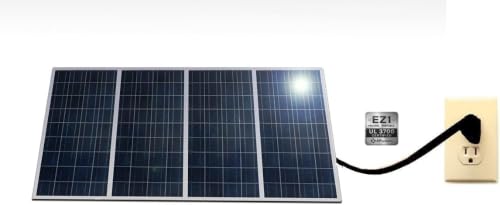 PluggedSolar 800 W kit PluggedSolar 800 W kitAC output not stated | Not confirmed. No lab listing found. | Maker says, not confirmed The maker says the kit is UL 3700 certified. It names no lab, and we found no lab listing. Not confirmed by a lab; not confirmed for California. | $1,795 on Amazon On Amazon US. No button here until a lab confirms the whole kit. | October 14, 2026 |
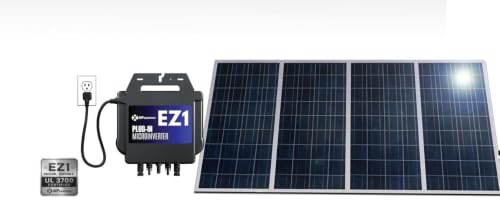 PluggedSolar 1,200 W kit PluggedSolar 1,200 W kitAC output not stated | Not confirmed. No lab listing found. | Maker says, not confirmed The maker says the kit is UL 3700 certified. It names no lab, and we found no lab listing. Not confirmed by a lab; not confirmed for California. | $2,690 on Amazon On Amazon US. No button here until a lab confirms the whole kit. | October 14, 2026 |
| Bright Saver kit 360 W AC | No. Only the inverter is certified. | Inverter only, not the whole kit Only the inverter is certified. Bright Saver says the whole kit does not have UL 3700 yet, and it does not ship to California. | $499 at Bright Saver Not on Amazon US | October 14, 2026 |
| APsystems EZ1 900 W AC | No. Only the inverter is certified. | Inverter only, not the whole kit An inverter only. APsystems says CSA certified it to UL 3700. California wants the whole plug-in system certified. | $325 at APsystems Not on Amazon US | October 14, 2026 |
| EcoFlow STREAM Microinverter 1,200 W AC | No. Not certified yet. | Not certified yet EcoFlow lists UL 1741, not UL 3700. solar.com reports its UL 3700 work as in progress. | $369 at EcoFlow Not on Amazon US | October 14, 2026 |
| EcoFlow STREAM Ultra 800 W AC | No. Not certified yet. | Not certified yet EcoFlow lists UL 1741 and IEEE 1547. solar.com reports UL 3700 as pending. | No US price Not on Amazon US | October 14, 2026 |
| CraftStrom 1,200 W kit 1,200 W AC | No. Not certified yet. | Not certified yet The maker says its inverters are “UL certified.” solar.com reports its UL 3700 application as filed, not granted. | No US price Not on Amazon US | October 14, 2026 |
| Anker SOLIX Solarbank AC output not stated | No. Not sold in the US. | No US listing No US version, so no US listing. | No US price Not on Amazon US | October 14, 2026 |
| EcoFlow STREAM AC Pro / PowerStream AC output not stated | No. Not sold in the US. | No US listing European 230 V units. No US listing. | No US price Not on Amazon US | October 14, 2026 |
| Zendure SolarFlow AC output not stated | No. Not sold in the US. | No US listing European units. No US plug-in listing. | No US price Not on Amazon US | October 14, 2026 |
| Jackery SolarVault AC output not stated | No. Not sold in the US. | No US listing Not sold in the US. | No US price Not on Amazon US | October 14, 2026 |
“Maker says” means the claim comes from the company selling the kit. We looked for each kit in the labs’ directories and say what we found. In July 2026, Environment America said no whole kit had UL 3700 yet. The full list, with every kit’s size and where it ships, is on our plug-in solar kit list.
What a plug-in kit saves on PG&E, SCE and SDG&E
An 800 W kit saves about $160 to $603 a year in California. Where you land depends on one thing most sites skip: how much of the kit’s power your home uses while the sun is up. California does not pay you for power that flows out to the grid. So the kit only saves money on power your home draws at the same moment.
| If your home draws, while the sun is up | PG&E | SCE | SDG&E |
|---|---|---|---|
| Only always-on devices (164 W) uses 41% to 60% of what the kit makes | $180 to $219 | $160 to $201 | $213 to $268 |
| Always-on devices, a fridge and a little more (300 W) uses 67% to 84% of what the kit makes | $258 to $357 | $225 to $323 | $295 to $425 |
| Every kWh the kit makes gets used the most a kit can save | $305 to $517 | $268 to $472 | $347 to $603 |
| Average price of the power the kit replaces | 38¢ to 39¢ | 34¢ to 35¢ | 47¢ to 48¢ |
The math, one example. An 800 W kit tilted on a stand in the Los Angeles area makes about 1,368 kWh a year (NREL PVWatts). A home drawing a steady 300 W can use about 67% of that, or 916 kWh, while the sun is up. The rest flows out to the grid and earns nothing. On SCE’s standard time-of-use plan, those midday kWh cost about 35¢ each. 916 kWh × 35¢ ≈ $323 a year.
A home that only runs its always-on devices (the TV box, router, chargers and the like) uses about 41% to 60% of what the kit makes. With a fridge and a bit more running, it is 67% to 84%. The kit pays best in a home where something is always running during the day.
Payback. The 800 W kits on our list cost $1,099 to $1,595. At the middle row of the table, payback runs from about 3 to 7 years. Neither of those kits qualifies in California yet, so treat this as a guide to what a legal kit will need to cost.
How we worked this out
- Sun: NREL’s PVWatts calculator, hour by hour for a typical year, for 800 W of panels facing south. On a railing (straight up) and tilted 30 degrees. It makes 747 to 1,368 kWh a year across the three cities we ran.
- Use: each hour, your home uses the smaller of what the kit makes and what the home draws. We hold the home’s draw steady. The 164 W case is the average always-on draw NRDC measured in 70,000 California homes. The 300 W case is our assumption.
- Price: each kWh is priced at the hour it is used, on the utility’s standard time-of-use plan, before any baseline credit, for a customer who buys power from the utility:
- PG&E: E-TOU-C (peak 4 to 9 p.m.), effective June 1, 2026. Sun data: Sacramento area. PG&E serves the valley around Sacramento; the city itself is served by SMUD. Rates
- SCE: TOU-D-4-9PM, no effective date shown. Sun data: Los Angeles area. SCE serves much of Los Angeles County; the city itself is served by LADWP. Rates
- SDG&E: TOU-DR1 (SDG&E's standard plan), effective August 1, 2026. Sun data: San Diego. Rates
If most of your use falls under your baseline amount, each kWh saves about 8¢ to 11¢ less. If you buy power from a community choice program, your price differs. Los Angeles (LADWP) and Sacramento (SMUD) customers are covered by the law too, but we did not model their prices. The fixed daily charge on your bill does not change.
What California’s law says, in plain words
SB 868 adds a short chapter to the state’s utility code. A kit counts only if it meets all six of these rules:
- Size: no more than 1,200 W of AC output per home, counting every kit you have.
- Plug: it connects and disconnects through a regular outlet.
- Purpose: it is meant to cover power your home uses, not to sell power.
- Codes: it meets the National Electrical Code and the California Electrical Code.
- Whole-kit listing: it is “certified as a plug-in photovoltaic system” by UL or an equal lab.
- Outage shut-off: a lab-certified feature keeps it from sending power to the grid in an outage.
If a kit meets all six, your utility cannot make you get approval, pay a fee, or add equipment. That applies to the big utilities, like PG&E, SCE and SDG&E, and to city-owned ones, like LADWP and SMUD. A kit that misses any rule gets none of this. Read the law.
Renters and condo owners
The law does not cover your landlord or HOA. SB 868 only deals with your utility. It does not mention landlords, tenants or HOAs. So your lease and your HOA rules still apply. Get a yes in writing before you hang panels on a balcony you do not own.
This is different from some other states. Colorado, New Jersey, Vermont and Virginia limit when a landlord can say no. See the state table.
Telling your utility: the online form
Your utility may ask you to fill out “a simple online registration form” with your address and the kit’s make, model and size. It cannot charge for it, and it cannot make you wait for approval. No utility had published the online form when we checked on October 14, 2026. The law lets a utility ask for one; it does not require one.
The 2030 sunset
The part of the law that frees kits from utility approval and fees ends on January 1, 2030, unless lawmakers extend it. From that same day, a plug-in kit that does not meet the code, whole-kit listing and outage shut-off rules cannot be sold in California. If the exemption is not renewed, the utilities’ normal rules could apply again. We will update this page when lawmakers act.
Why a plug-in kit shuts off in a blackout
A plug-in kit gives you no power in an outage. The law requires a certified feature that cuts the kit off when the grid goes down. That keeps it from sending power onto lines that repair crews are working on.
If you want power during planned power shutoffs (PSPS) or storms, you need a battery. A portable power station with a solar panel runs a fridge, lights and phones with the grid down. See the best power stations for home backup and how many solar panels a power station needs. Never plug a power station or generator into a wall outlet to feed the house. Here is what to use instead.
Questions people ask
Is plug-in solar legal in California?
Yes, from January 1, 2027, under SB 868. Until then, your utility’s normal rules for home solar apply. From that date, a kit up to 1,200 W AC that is certified as a whole plug-in system needs no approval and no fee.
Can I buy a plug-in solar kit that is legal in California now?
Not yet, as far as we can find. No kit has a whole-system listing in a lab’s own directory. Mango Power says Intertek certified its Mango Power S kit, which makes it the closest so far. Kits that qualify are expected in spring to mid-2027.
Do I have to tell PG&E, SCE or SDG&E?
Only if your utility asks. The law lets a utility require a free, simple online form with your address and the kit’s make, model and size. It cannot make you wait for approval. No utility had posted the form when we checked.
Will my utility pay me for extra power?
No. The law says the kit is meant to offset the power your home uses, and it sets up no payment for power sent to the grid. Plan on saving money only on power your home uses while the sun is up.
Can my landlord or HOA say no?
The law does not say. SB 868 only covers your utility. It does not mention landlords, tenants or HOAs, so your lease or HOA rules still apply. Ask before you hang panels on a balcony you do not own.
Does a plug-in kit work in a power outage?
No. The law requires a certified feature that cuts the kit off from your home’s wiring when the grid goes down. For power in a blackout, you need a battery, such as a portable power station.
What happens in 2030?
The part of the law that frees kits from utility approval ends on January 1, 2030, unless lawmakers extend it. From the same date, a plug-in kit that is not certified this way cannot be sold in California.
How much does a plug-in solar kit save in California?
For an 800 W kit, roughly what the table on this page shows. A home that only runs its always-on devices uses about 41% to 60% of what the kit makes. The rest earns nothing.
Sources
- SB 868, chaptered text (Chapter 985, Statutes of 2026), read October 14, 2026
- Senator Scott Wiener's office, as reported by solar.com, read October 14, 2026
- KQED: signing story, read October 14, 2026
- Environment America: UL 3700 statement (July 2026), read October 14, 2026
- Senator Wiener's office (May 19, 2026 release), read October 14, 2026
- NRDC, Home Idle Load study (press release, May 6, 2015), read October 14, 2026
- PG&E: PG&E tariff, Schedule E-TOU-C, total bundled rates, read October 14, 2026
- SCE: SCE time-of-use rate page (it shows no effective date), read October 14, 2026
- SDG&E: SDG&E Schedule TOU-DR1 total rates table, read October 14, 2026
- SDG&E time-of-use hours, read October 14, 2026
- NREL PVWatts v8 (National Laboratory of the Rockies API), read October 14, 2026
- Mango Power S kit: pv magazine USA, September 21, 2026, read October 14, 2026
- PluggedSolar 800 W kit: PluggedSolar product page and Amazon listing, read October 14, 2026
- Bright Saver kit: Bright Saver kit page, read October 14, 2026
- EcoFlow STREAM Microinverter: EcoFlow product page; solar.com UL 3700 list (September 2026), read October 14, 2026
- Anker SOLIX Solarbank: Anker SOLIX US store, read October 14, 2026
- EcoFlow STREAM AC Pro / PowerStream: EcoFlow, read October 14, 2026
- Zendure SolarFlow: Zendure US store, read October 14, 2026
- Jackery SolarVault: Jackery US store, read October 14, 2026
Related: plug-in solar in every state · plug-in solar kits, with their safety listings checked · power stations for home backup.